The short version
Around Columbia, mosquito season runs from about May through September. Treatment means removing water and treating what you can't drain. A barrier spray follows every few weeks.
- Dump standing water every week.
- Daytime biters are usually tiger mosquitoes.
- Barrier sprays last about three to four weeks.
- Larvicide handles water you can’t drain.
- Use repellent with DEET, picaridin or IR3535.
Anyone in Columbia tired of mosquito bites at home.
What to look for
In summer heat, eggs become biting adults in about a week. Often the source is a neighbor's yard or a storm drain. Mosquitoes breed in standing water, even a bottle cap's worth.
- 1Dogs testing positive for heartworm.
- 2A neighbor's pool turning green and untended.
- 3Being bitten in full daylight, not just evening.
- 4Mosquitoes indoors resting on walls or in closets.
- 5Bites getting worse after each wet spell.
- 6Kiddie pools left full for days.
Why it’s worth acting soon
- Each new generation is bigger than the last.
- Bites can spread West Nile virus.
- Itchy welts, especially for kids.
- Heartworm risk for dogs.
bite, to get protein for their eggsOnly female mosquitoesUS CDC in standing water, from a bottle cap to a pondMosquitoes breedUS EPA West Nile virus is the most common mosquito-borne disease in the U.S.Mosquito diseasesUS CDC 📅
Mosquito activity through the year in Columbia
Spring
dump water and clean gutters before May.
Summer
peak season in Columbia, especially July and August.
Fall
activity fades with cooler nights.
Winter
fix drainage and store containers upside down.
Treatment options and typical costs
Property Inspection for Breeding Sites
$0–$150 (often bundled with a first treatment)
Most mosquitoes biting you in Columbia were born within a few hundred feet of your door, so the inspection maps every container, drain, and puddle on the lot. That map becomes the treatment plan.
- Time
- 30–60 minutes
- Best for
- Every yard; finds where mosquitoes actually breed
Misting Systems and In2Care-Style Stations
misting $2,000–$4,500 installed plus refills; stations $200–$500 per season
Stations suit small Columbia lots, townhome yards, and properties where the owner would rather not have spray. They work slowly, so pair them with source reduction.
- Time
- Misting: half a day. Stations: under an hour.
- Best for
- Specific yards: heavy outdoor use or spray-averse owners
Barrier (Residual) Yard Treatment
$75–$200 per visit; $350–$900 per season
Crews should skip blooming plants and vegetable beds when spraying a Columbia property to protect bees and food crops. A careful applicator treats resting cover, not the whole yard.
- Time
- 20–45 minutes per visit, repeated every 3–4 weeks
- Best for
- Shaded yards with shrubs, ivy, and dense landscaping
Source Reduction and Larviciding
$75–$150 per visit
Source reduction just means taking away the water mosquitoes need: tipping containers, clearing gutters, fixing drainage and filling ruts around your Columbia yard. It is the cheapest control there is.
- Time
- 45–90 minutes
- Best for
- Yards with standing water, clogged gutters, ponds, or drains
Prices are typical published ranges. Ask what’s included before you compare quotes.
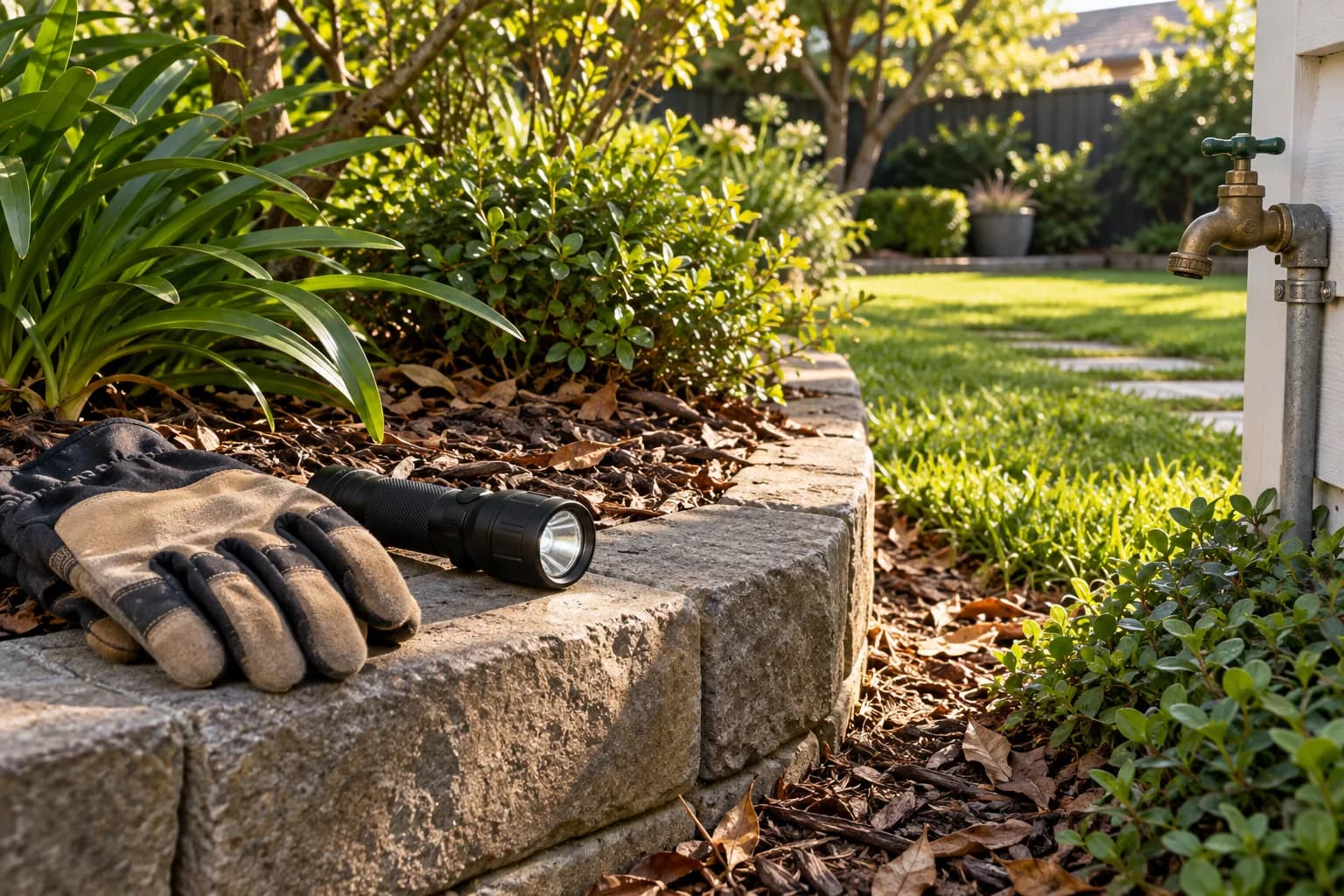 Adult mosquitoes spend the day in shady, leafy beds like this one, so that's where a barrier treatment goes.
How mosquito treatment works in Columbia.
Barrier spray covers shady shrubs and leaves. Larvicide handles water you can't drain, like ponds or drains. Around Columbia, the season runs from about May through September, so a plan usually starts in spring and runs to the end of the season. Then spray where the adults rest. First, find and remove the water where they breed. Treatment has two parts.
Which mosquitoes bite around Columbia.
They're the main West Nile carriers. They breed in storm drains. House mosquitoes (Culex) bite from dusk into the night. They breed in small containers. They're black-and-white and bite by day. Asian tiger mosquitoes are common around Columbia.
 Mosquitoes that bite indoors usually slip in through gaps around doors or torn window screens.
Mosquito season in Columbia.
Numbers usually peak in July and August. West Nile cases usually peak in late summer.
A year of mosquitoes in Columbia.
- Winter: fix drainage and store containers upside down. - Fall: activity fades with cooler nights. - Summer: peak season in Columbia, especially July and August. - Spring: dump water and clean gutters before May.
The weekly water walk.
- Tree holes: fill them with sand. - AC drip lines and downspouts: make sure water drains away. - Pet bowls: refresh daily. - Birdbaths: change the water twice a week. - Tarps and covers: pull them tight so water runs off. - Toys and buckets: store them upside down. - Saucers and pots: empty them or add sand. - Gutters: clear leaves so water drains.
Avoiding bites.
- Timing: tiger mosquitoes bite by day; house mosquitoes at dusk. - Screens: repair holes in window and door screens. - Fans: a patio fan keeps weak-flying mosquitoes away. - Clothing: long sleeves and pants help at dusk. - Repellent: DEET, picaridin, IR3535 or oil of lemon eucalyptus.
Low-cost ways to cut mosquitoes.
- Lights: yellow bug lights attract fewer insects to the porch. - Trimming: thin out dense shrubs and tall grass. - Pumps and fountains: moving water breeds far fewer mosquitoes. - Mosquito fish: they eat larvae in ornamental ponds. - Mosquito dunks: Bti tablets kill larvae in rain barrels and ponds.
Mosquito or look-alike?
- Mosquitoes: slim, long legs, and a needle-like mouth. - No-see-ums: tiny biting gnats near marshes. Screens need a finer mesh. - Non-biting midges: swarm near water at dusk. Harmless, just annoying. - Crane flies: look like giant mosquitoes. They don’t bite.
When a bite needs a doctor.
Spreading swelling or an infected-looking bite needs a check too. See a doctor for high fever, stiff neck or confusion. About one in five get a fever, headache or body aches. Most people infected with West Nile virus never feel sick. Most bites just itch for a few days.
Protecting your pets.
Refresh pet water bowls daily, dump saucers after Columbia's summer storms, and keep animals inside until a yard treatment dries. Talk to your vet about year-round prevention. Heartworm reaches dogs through mosquito bites, and cats can get it as well; in Columbia the main exposure runs July through September.
What a treatment visit looks like.
Most plans repeat every three to four weeks. Then they spray shady shrubs, where adults rest. Larvicide goes in water you can't drain. They dump or treat standing water. The tech walks the yard first. A visit usually takes 20 to 45 minutes.
Rain barrels and ponds.
- Pool covers: drain standing water after rain. - Tarps: shake out any that hold rainwater. - Gutters: clear them so water drains away. - Bird baths: change the water every few days. - Ponds: fish and moving water keep larvae down. - Barrels: cover openings with fine mesh.
Questions to ask before you sign.
- When can kids and pets go back outside? - How do you protect bees and flowers? - What happens if bites come back between visits? - Do you treat standing water too? - How often will you come? - What product will you spray?
What affects the price
- Special-event timing and rush scheduling.
- In2Care-style station count and servicing.
- Commercial or multi-unit property.
- One-time visit versus a seasonal plan.
- Ponds, creeks, or wetland edges on the property.
- Re-treatment policy between scheduled visits.
📊
What's your biggest concern about mosquitoes?
When to call for help
early in the season, before the first big wave. Ponds, drains and dense shrubs are hard to handle yourself. Call if bites still keep you indoors. Dumping water should come first.
What you can do yourself
They also spray where adults rest, every few weeks. A pro adds larvicide for water you can't drain. Use repellent and run a fan on the patio. The biggest win is free: dump standing water every week.
Mosquitoes in Columbia
With about 42 inches of rain a year in Columbia, any container left out will hold water within days. Summer highs around 87°F in Columbia speed up the life cycle, and average humidity near 66% keeps adults active. In Columbia's neighborhoods, the usual sources are gutters, plant saucers, kids' toys and birdbaths. Columbia has a humid subtropical climate, and mosquitoes activity here tends to pick up late spring through early fall; year-round in the deep south. Around Columbia, most of the housing is suburban, so the usual entry points, moisture spots, and sheltered areas near the structure are what an inspection checks first. Around Columbia, take a minute to note where you have seen activity and when it appears, so the inspection is faster and the quote more accurate. A local provider who knows Columbia and Maryland can point out the specific conditions that matter most here before you commit to a plan. Around Columbia, before you book, ask whether the inspection is included, what the treatment plan covers, how many visits to expect, and what the written quote includes. Around Columbia, getting the scope, the prep steps, and any follow-up terms in writing makes it much easier to compare providers fairly, and a good provider will walk you through each of these without pressure.
Local research
Mosquitoes in Columbia, MD: what the public record shows
Before you compare quotes, it helps to know which mosquitoes actually live in Maryland, when they are busiest around Columbia, and what the state figures look like. Everything below links to the agency or university page it came from.
West Nile neuroinvasive disease cases, 2024
Neuroinvasive counts are the most reliable state comparison because nearly all severe cases are diagnosed and reported.
CDCWhen mosquitoes are busiest around Columbia
CDC: West Nile transmission June through October, peaking late August to early September. Illinois found its first positive mosquito batch of 2025 on May 9, so larval control should start in May.
For context, nationally
- 1,808 — West Nile virus disease cases reported, 2024. CDC
- 1,347 (75% of cases); 173 deaths — West Nile neuroinvasive disease cases, 2024. CDC
Sources: CDC. Figures are quoted as the source prints them. How we check our sources
Simple ways to keep mosquitoes away
- Trim shrubs and ivy to reduce resting cover.
- Dump and scrub birdbaths every week.
- Book barrier treatments before the season starts.
- Replace corrugated downspout extensions with smooth pipe.
- Keep pools chlorinated and covered when unused.
- Tighten lids on trash and recycling bins.
 When you compare quotes, look at the season total, how many visits it covers and what happens if the bites come back.
Did you know?
A female's wings beat hundreds of times per second
Mosquito means little fly in Spanish
Questions people ask
Will mosquito treatment kill bees and butterflies?
It can if spray hits flowers. Ask them to skip blooming plants. Spraying when bees rest helps too.
Are misting systems worth it?
For a few homes, yes. They're costly to install and need refills. Most yards do fine with source removal and regular spraying.
What is the difference between larvicide and barrier spray?
It stops larvae from maturing. Barrier spray goes on leaves where adults rest. Most plans use both.
When should mosquito treatments start each year?
Before the first big wave. Around Columbia, the season runs from about May through September, so start a few weeks before.
Can I get rid of mosquitoes permanently?
Not completely. They fly in from nearby. Removing water and spraying resting spots cuts them down a lot.
What do most homeowners do about yard mosquitoes?
Around Columbia, mosquito control works by removing standing water, treating the water that cannot be drained, and applying barrier treatments where adults rest. Around Columbia, because they keep breeding through the season, an ongoing plan usually works best.
Do store-bought mosquito products actually work?
Around Columbia, dIY sprays and foggers give temporary relief, but they do not stop the next generation from breeding in the standing water nearby. Around Columbia, the most effective DIY step is removing the water, and professional larvicide and barrier treatments handle the rest.
When is mosquito season in Columbia?
It runs from about May through September. Daytime biters are tiger mosquitoes; evening biters are usually house mosquitoes.
Do mosquitoes in Columbia carry West Nile?
They can. West Nile is found in every lower-48 state, Maryland included. Cases usually peak in late summer. Repellent and dumping standing water are your best protection.
Nearby cities
Related guides
Sources (10)
The facts in this article come from the public sources listed above. Every home is different, so ask the company you talk to about pricing and what’s included. Published by Mosquito Exterminator · Updated September 11, 2026 · How we write these guides